The blog

Investing in branding is a meaningful step for any business. It can happen when a founder is bringing a new idea to market, after years of building a business organically, or when a company has reached a point where its existing identity no longer reflects where it’s headed.
Knowing when that moment has arrived isn’t always straightforward. There’s no revenue milestone or number of years in business that automatically makes it the right time. In their conversations with founders, Isla Luna Studio co-founders Paige Powell and Kayle Schlesner tend to look for something more specific: a clear sense of what the business is, who it’s for, and where it’s going, along with a product or service that’s ready to support the work.
They also pay attention to how a founder approaches the partnership itself. As Paige puts it, the strongest projects start with “a vision, but being willing to work with the team to push it further” and bring it somewhere that makes sense for the audience and the impact the business is trying to make.
Those signals can look different depending on where a business is in its growth. You might be preparing to launch something new, evolving a business you’ve spent years building, or realizing that the brand you started with no longer fits. Here are five signs the timing may be right.
1. You know who you’re building for

A strong branding project starts with knowing who the business is for and why it exists. That doesn’t mean having every detail of your positioning or visual identity figured out. It means being able to talk about your audience, your offering, and what makes the business worth choosing.
Kayle sees that clarity as one of the first things that comes through in an early conversation. “They know exactly who their audience is, why they’re doing what they’re doing, and are super clear on what their vision is for the brand.”
That vision isn’t necessarily about knowing exactly what the brand should look like. It can be much more fundamental: understanding how you want your audience to experience the business, what you want them to feel, and what you hope the brand becomes over time.
It also helps to have some sense of the road ahead. You don’t need a five-year plan mapped down to the last detail, but having a picture of what you want the business to look like a year from now, and further down the road, gives us useful context for the work. That kind of clarity is part of what we explore through our brand strategy and design expertise
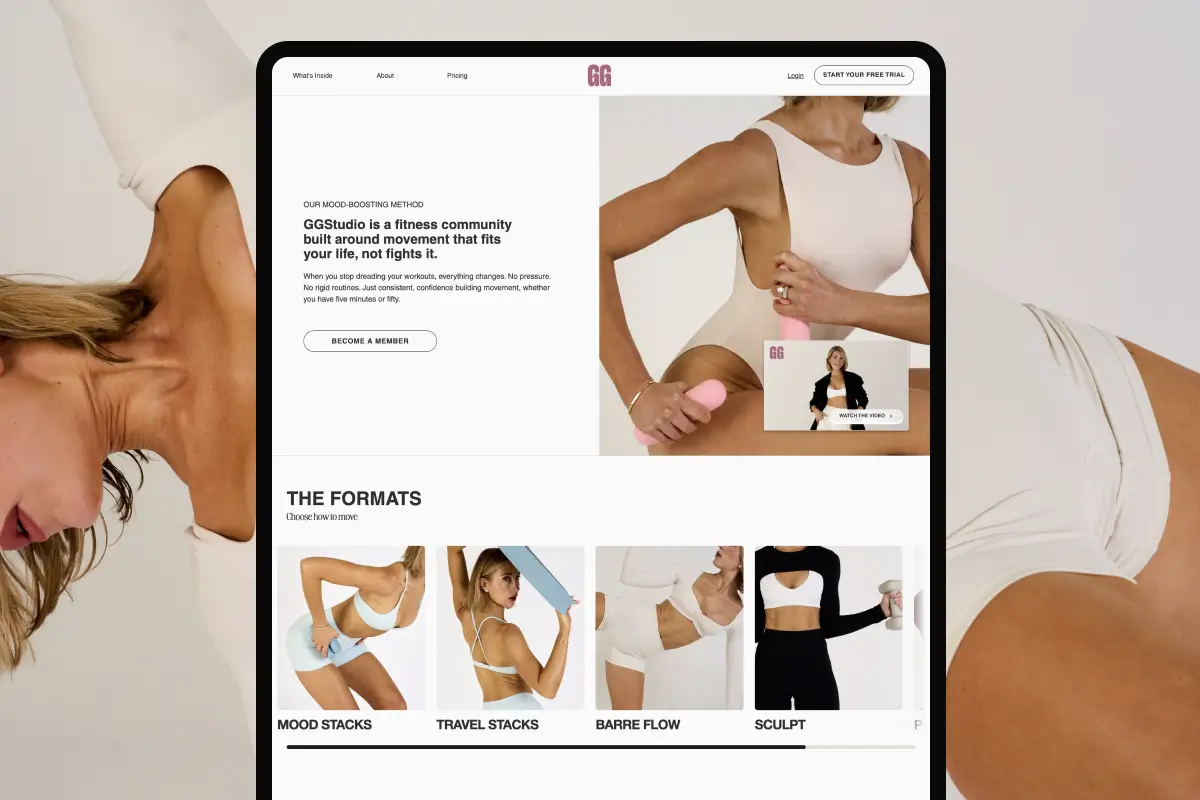
Take Isla Luna Studio fitness client GGStudio for example. By the time we started working together, GGStudio founder Gabby George had already built an organic audience, understood what made her offering different, and organized the business around the content and workouts she had developed. The branding had a clear business and point of view to build from.
2. Your product or service is ready for the spotlight
By the time we begin a branding project, there should be a defined offering underneath it. You don’t need every aspect of the business perfected, but we should know what you’re actually bringing to market.
For a product-based business, that might mean moving beyond prototyping and R&D. For a service business, it could mean having a clear understanding of what you offer, how it works, and what someone is actually buying from you.
“As a branding agency, we are not responsible for creating the product or setting up the product itself,” says Kayle. “That’s something that we trust the client to handle, especially because they’re going to be doing it day-to-day and we aren’t.”
GGStudio was a strong example of that timing. Gabby had already set up the platform she was using, developed her workout content, and worked through how the product would function before we came into the picture. That meant the branding could focus on bringing an established offering to life rather than waiting for the offering itself to take shape.
When a product or service is ready, the branding process can move alongside the business and help it present that offering with greater clarity.
3. You have the business fundamentals in place
The same goes for the business behind the offering. We don’t expect founders to arrive with every answer or a perfectly mapped-out business plan, but there should be some clarity around what you’re selling, how the business works, and what you’re trying to accomplish.
Kayle describes the ideal starting point as having “a clear vision from a business standpoint of what the product, what the service is, what their goals are.”
We’re always going to have opinions along the way, and there may be moments when we question something or recommend a different direction. That’s part of bringing an outside perspective into the process. But there’s a difference between asking for our perspective on the brand and asking us to determine the business itself.
If you’re still working through your pricing, changing your service offering, or trying to figure out what the business should actually be, more time in that process can be valuable. Testing an idea, working with early customers, and learning what resonates can give you information that will ultimately make the branding stronger.
For Paige, that early work is often part of the journey toward being ready. Founders may spend time figuring things out themselves before they reach the point where they want to bring in a studio. The more experience you have with the business, the more useful that perspective becomes once the branding process begins.
4. You have a vision, and you’re open to bringing a partner into it

The strongest branding projects usually start with a founder who has a point of view. You know what you want the business to become, you have ideas about what the brand could feel like, and you have a sense of the impact you want to make.
At the same time, there needs to be room for the work to evolve once another perspective enters the room.
Paige describes it as having “a vision, but being willing to work with the team to push it further and to connect deeper with the target audience ultimately driving impact in a way that’s meaningful to the brand.”
That’s part of what makes the relationship a partnership. You’re bringing us in because of our experience and perspective, so we want to be able to use both. We may challenge an idea, suggest a different direction, or see an opportunity that wasn’t obvious at the start of the project.
There’s plenty of room for a founder to have strong opinions. In fact, we want that. What makes the work productive is being able to bring those ideas into the room while trusting the team to push them further.
5. You see the value of branding in the future of the business

Branding works best when you’re thinking beyond the immediate launch. Paige often sees the strongest clients approaching the work as something they’ll carry with them for years, using the brand as the business grows and evolves.
That doesn’t mean you need to know exactly what the next five years will look like. It means the investment makes sense for where the business is headed, and you’re ready to give the brand the attention it needs once the work is complete. We’re happy to talk through budget, scope, and timing to make sure the project fits where you are today.
The founders we work with understand that a strong brand can keep working for the business long after the initial project is finished. When the timing is right, the goal is to create something that gives you room to grow rather than something you’ll quickly outgrow.

What “not quite ready” looks like
Sometimes, the business simply needs a little more time to take shape before branding becomes the right next step. You may still be working through your services, figuring out your pricing, or changing direction as you learn more about what the business needs.
We also hear from founders who are looking for help answering some of those bigger business questions. They may be wondering what they should offer, who they should sell to, or how they should price it. Those are important questions to work through, but they’re part of developing the business itself. Our role becomes much more valuable once there’s a clearer vision for what we’re building around.
There’s nothing wrong with asking questions or with taking some time to figure things out on your own. Paige specifically points to DIY as a normal part of the process, noting that it’s “totally normal for people to just start and figure out things themselves before they actually go and invest in a company like Isla Luna Studio.”
For some founders, that means testing an idea, building an audience, refining an offering, or learning what works before bringing in a branding partner. That experience can make the eventual investment much more informed because you’ve had time to understand the business you’re building and where it needs to go.
If the business is still changing, there’s value in giving it room to develop. Once the direction becomes clearer, branding can help you take what you’ve learned and build from it.
Your stage of growth shapes the kind of branding you need
Branding can enter the picture at very different points in a business’s growth. A founder starting from scratch has different needs from an established company that has outgrown its identity, just as a recognizable brand may need something different from a business that has a strong foundation and wants to refine it.
Starting from scratch
Kayle describes these as businesses that haven’t entered the market or have only entered on a very small scale. They’re often startups, but that doesn’t necessarily mean they’re first-time entrepreneurs.

Paige points out that Isla Luna Studio isn’t typically the first company someone calls when they have an idea for a business and nothing else. Our starting-from-scratch clients are more often experienced entrepreneurs, founders working with investment firms, or businesses that have already raised capital and are ready to bring in a senior creative team.
There are also situations where the brand itself needs to come together before other parts of the business can move forward. A founder may need a brand identity before securing a physical space, for example, because the brand helps demonstrate that the business is ready to become something real.
Rebrand or refresh
For an established business, the question becomes how much of the existing brand still works.
A rebrand tends to make sense when a company has been in the market for several years, built a recognizable following, and reached a point where its existing identity no longer connects with the audience it wants to reach. In those cases, the work may involve reimagining the logo and broader brand identity more substantially.
We saw that evolution with LiM Method, a pelvic floor wellness brand that came to us ready to clarify its positioning and better communicate what made its approach different. We helped shape the brand strategy, messaging, and visual identity around its more comprehensive approach to pelvic floor health, giving the business a clearer way to communicate its expertise and connect with the women it serves.

A refresh can make more sense when the brand already has recognition and there’s value in keeping some of what people know. Kayle describes this as a situation where “the bones are there, the foundation is there,” and the goal is to refine and enhance the elements around the existing identity without unnecessarily disrupting the audience.
In practice, that might mean keeping a recognizable logo while refining the typography, color palette, graphic elements, messaging, or other pieces that shape how the brand comes across. The right approach depends on how much the business has changed, what the audience already recognizes, and how much of the existing identity is still doing its job.
The work needs someone to carry it forward
A branding project doesn’t end at launch — once the new identity is in place, someone has to carry it forward. That doesn’t require a large marketing department or full internal team. For some businesses, it may simply be the founder or one person taking ownership of the brand across day-to-day channels.
Connect Pelvic Floor Fitness is a good example of what that can look like in practice. The business has the team and infrastructure to support the brand beyond the initial project, which has allowed our foundational brand work to anchor the business as it evolves and grows.

As Paige puts it, “There needs to be a dedicated person or team willing to execute on the work consistently if they want to see 100% of the results to sustain growth.” The goal isn’t to build a brand and leave it sitting on its own. It’s to create something your business has the capacity to use, maintain, and grow with over time.
So, are you ready?
There’s no single moment when every business becomes ready for branding. For some founders, it happens at the beginning, when they have a clear idea and a defined offering they’re ready to bring into the world. For others, it comes after years of building the business themselves and reaching a point where the brand needs to catch up.
The common thread is having enough clarity to know what you’re building, a business that’s ready for the work, and a willingness to bring a partner into the process. From there, the right approach might be a new identity, a rebrand, or a refresh of what’s already working. You can explore how we approach brand strategy and design or see how that work comes to life across our case studies.
Ready to take the next step? Start a project with Isla Luna Studio.

Looking to fall down more rabbit holes?
Related Articles

What's the Difference Between Branding and Marketing?
Branding and marketing play different roles, but they work best when they’re built to support one another. In this post, we break down what branding establishes, how marketing puts that foundation to work, and how the two can evolve together as your business grows.

The Advantage Every Brand Founder Already Has
For some brand founders, the natural inclination is to treat themselves like background information. They’re comfortable speaking about their business and they can explain the product and market opportunity. But when it comes to the deeper story — the reason they started, the frustration they experienced before anyone else acknowledged it....

Answering Our Most Frequently Asked Questions
From project timelines and investment ranges to post-launch support and ROI, this FAQ covers everything you need to know about working with Isla Luna Studio. Explore our approach to branding, website design, marketing strategy, and building impactful businesses.
Good things, straight to your inbox
Stay in the loop on Isla Luna Studio news, a peek behind the scenes, and more.
