The blog

Branding and marketing are often used interchangeably, particularly as the scope of marketing has expanded.
What used to feel like a fairly defined discipline now encompasses everything from email and SEO to social media, digital advertising, content, and go-to-market strategy. There are entire specialties with “marketing” in the name, each serving a different purpose, which can make it difficult to understand where branding ends and marketing begins.
At Isla Luna Studio, we think about the distinction in fairly simple terms: branding is the foundation of a business, while marketing is how that foundation gets put to work. Branding defines who you are, what you stand for, and ultimately lays the groundwork for how your audience will perceive you. Marketing brings those ideas to your audience through the channels, campaigns, and communication that help build awareness and drive action.
That distinction becomes especially useful when you’re deciding what your business needs at a particular stage. Branding establishes the strategy, positioning, messaging, and visual identity that shape how the business shows up, and more importantly, how your audience perceives you. It helps establish the foundation from which a brand’s reputation can develop over time, giving your decisions and communications a consistent point of reference that shapes the overall customer experience. Marketing, on the other hand, puts that foundation into practice through channels that reach your audience.
Understanding the difference between branding and marketing can help you make better decisions about where you need creative direction, where you need ongoing marketing support, and how the two should work together.

Branding creates identity
At its simplest, branding is the process of creating a recognizable identity. For us, that goes beyond a logo or color palette. It starts with understanding the business itself: who it is, who it serves, what it offers, what makes it distinct, and how it wants to be positioned.
“Branding is about building the reputation of a business, product, or person so that when someone encounters that brand, they immediately understand what it is, who it is for and what it stands for,” says Isla Luna Studio co-founder and chief executive officer Paige Powell. “It’s the process of shaping that perception through every element we create, all anchored to an overarching vision that people can connect with and remember.”
That overarching vision gives the individual elements of a brand their direction. Brand strategy and positioning help define the space a business wants to occupy, messaging gives it a consistent way to communicate, and visual identity translates those ideas into a recognizable system. Together, those elements give a business a clearer framework for how it presents itself across its website, marketing, packaging, social channels, and other touchpoints.
A brand’s reputation ultimately extends beyond the work of a branding studio like Isla Luna Studio. How a business operates, communicates, serves its customers, and delivers on its promises all contribute to how it is perceived over time. Our role is to help establish the strategic and creative foundation that gives the business a clear identity and a consistent way to express it.
That foundation gives marketing a clearer place to start, with an established sense of who the business is, what it stands for, and what it wants people to associate with it.

Marketing turns identity into action
Marketing has a broader, more executional role. At its most basic, it is about getting your target audience aware of a product or service and ultimately encouraging the right people to purchase it. Email marketing, SEO, social media, digital marketing, content, advertising, and go-to-market planning can all sit within that larger discipline.
The channels may change, but the work tends to share a similar rhythm: put something into the world, see how people respond, learn from those results, and adjust what happens next. That ongoing iteration is one of the clearest distinctions between marketing and branding.
“Marketing is really an ongoing process of seeing what’s working, what’s not working, and continuing to iterate based on what you’re learning from your audience,” says Isla Luna Studio co-founder and chief creative officer Kayle Schlesner. She sees that work continuing well after a brand launches, with teams testing what they’ve built, paying attention to what resonates, and making changes as they better understand their audience.
Your marketing team is also much closer to those day-to-day insights. They’re seeing what people respond to, what questions are coming through email or DMs, which messages are moving people toward a purchase, and where there may be opportunities to improve. Those learnings can then inform the next campaign, channel, or message.
That doesn’t mean the brand stays fixed while marketing changes around it. A well-defined brand gives those decisions a consistent point of reference, while the ongoing work of marketing helps you learn what resonates and where the business needs to evolve.
The two functions serve different purposes, but marketing becomes easier to direct when there’s a clear brand underneath it.
You can’t market without a clear brand identity
Kayle often explains the relationship between branding and marketing through a simple analogy: think of branding as the couch and your marketing as the throw pillows. “The couch is that foundational piece and is a bigger investment, while the pillows can change as your taste, needs, or circumstances evolve,” says Kayle Schlesner.
The same principle applies to a growing business. You’re going to introduce new products, test different messages, try new channels, respond to seasonal opportunities, and learn more about your customers. Those decisions can change over time, but they still need to connect back to a clear sense of who the business is and what it stands for.
That’s where a well-defined brand becomes useful to the people responsible for marketing. The positioning, messaging, and visual identity give the team a clear understanding of what they’re marketing and how the business should be presented, whether they’re developing a new campaign, launching a product, or testing a different channel.
Marketing can then do what it’s meant to do: reach the right audience, learn from their response, and adapt based on what the business discovers. The brand doesn’t need to change every time the marketing does. It provides the consistency underneath an ongoing process of testing and evolution.

What a branding agency does — and where marketing takes over
At Isla Luna Studio, we’re the creative partner responsible for building the foundation of your brand. We work as creative directors and partners throughout the branding process, helping define the strategy, positioning, messaging, and visual identity that give a business a clear direction.
Our branding services can include the logo, color palette, typography, icons, patterns, and other brand assets, along with the strategy that helps inform those visual decisions. We also create the brand materials and examples a team needs to understand how the system should come together across different touchpoints.
The goal is to give your team a brand they can understand, use, and build from. As Paige explains, we provide the guidelines, assets, and strategic foundation needed to carry the brand into its marketing, while the day-to-day execution and channel-specific decisions typically remain with the client or their marketing team.
Depending on the project and what a business needs, our involvement can extend beyond the initial branding engagement. While we generally aren’t the team managing every aspect of a brand’s ongoing marketing, we can continue to support clients as new needs arise, whether that’s creating social media or email templates, developing landing pages for new launches, ongoing website support, creating onboarding flows, or any other key priorities for the brand.
Our broader role is to make sure your team has the clarity, strategy, and tools to take the brand forward. We generally wrap our work at the end of a project rather than moving into an ongoing retainer relationship, while remaining available to help refine or build on the foundation when a business evolves and brings new learnings back to us.
That division of responsibility also makes sense because your marketing team is closest to the day-to-day performance of the business. They’re gathering audience feedback, watching what resonates, and seeing where there are opportunities to improve. As Kayle explains, because we aren’t involved in those daily conversations with a client’s customers, we rely on the insights their team brings back to us when it’s time to optimize or refine the work.
What a strong foundation makes possible
The value of a strong brand foundation becomes particularly clear once a business starts using it across the rest of its marketing. We’ve seen that play out across our case studies in different ways, from packaging and content to the way clients communicate with customers and approach new opportunities.
For Eat Omega 3, a plant-based nutrition brand focused on making omega-3-rich foods more accessible, Isla Luna Studio’s brand work extended across strategy, identity, packaging, photography, and video content, giving the company a cohesive foundation to carry into its marketing. The imagery and video from the brand shoot also became useful sales tools for its B2B business, including outreach to potential school accounts.

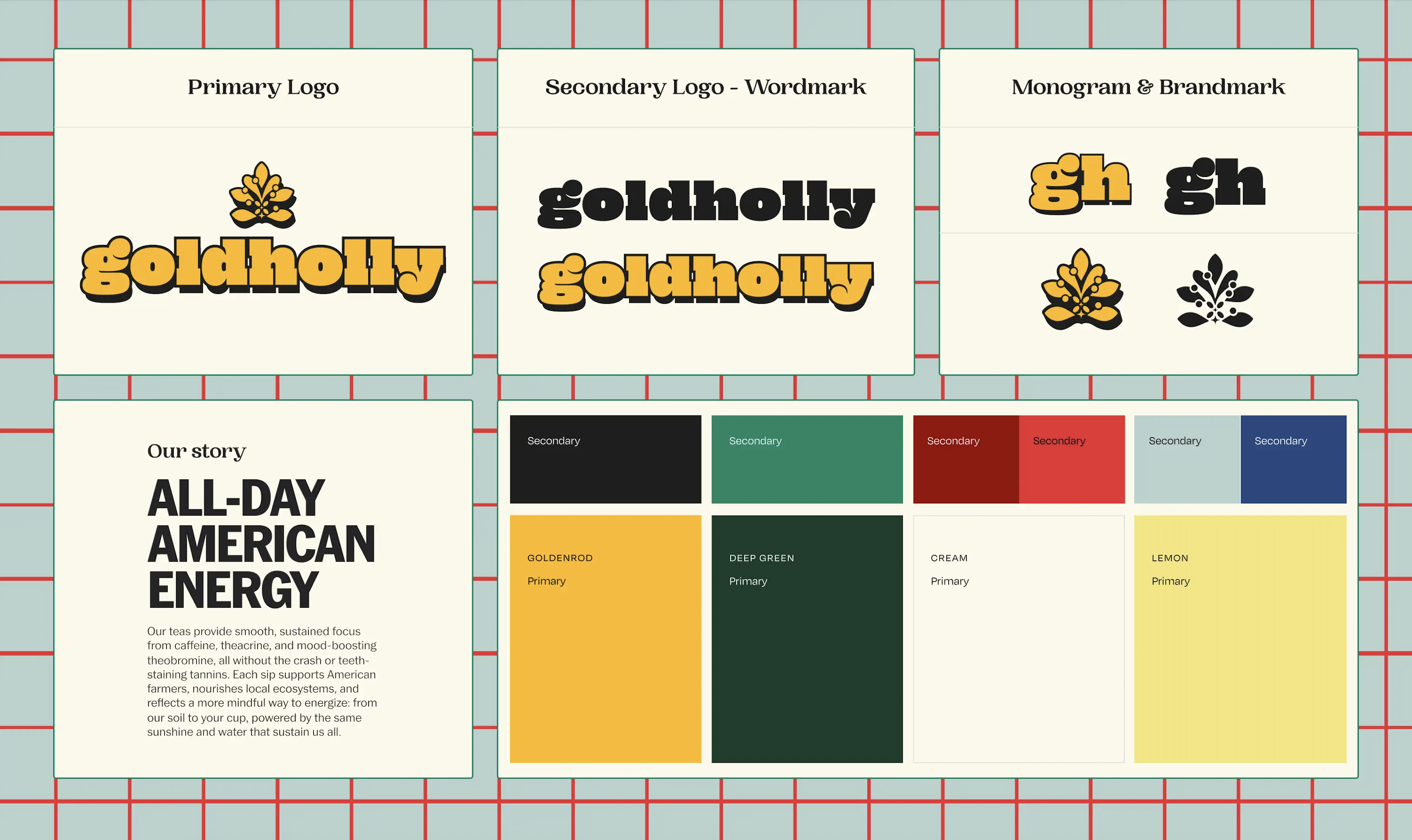
Goldholly, a yaupon holly tea brand, shows how that same foundation can support a brand as it grows. We refreshed the logo and packaging (view the case study here) as the company prepared to take the business to its next level, creating a more cohesive system that could extend beyond the packaging itself and give the brand a stronger foundation for future work.
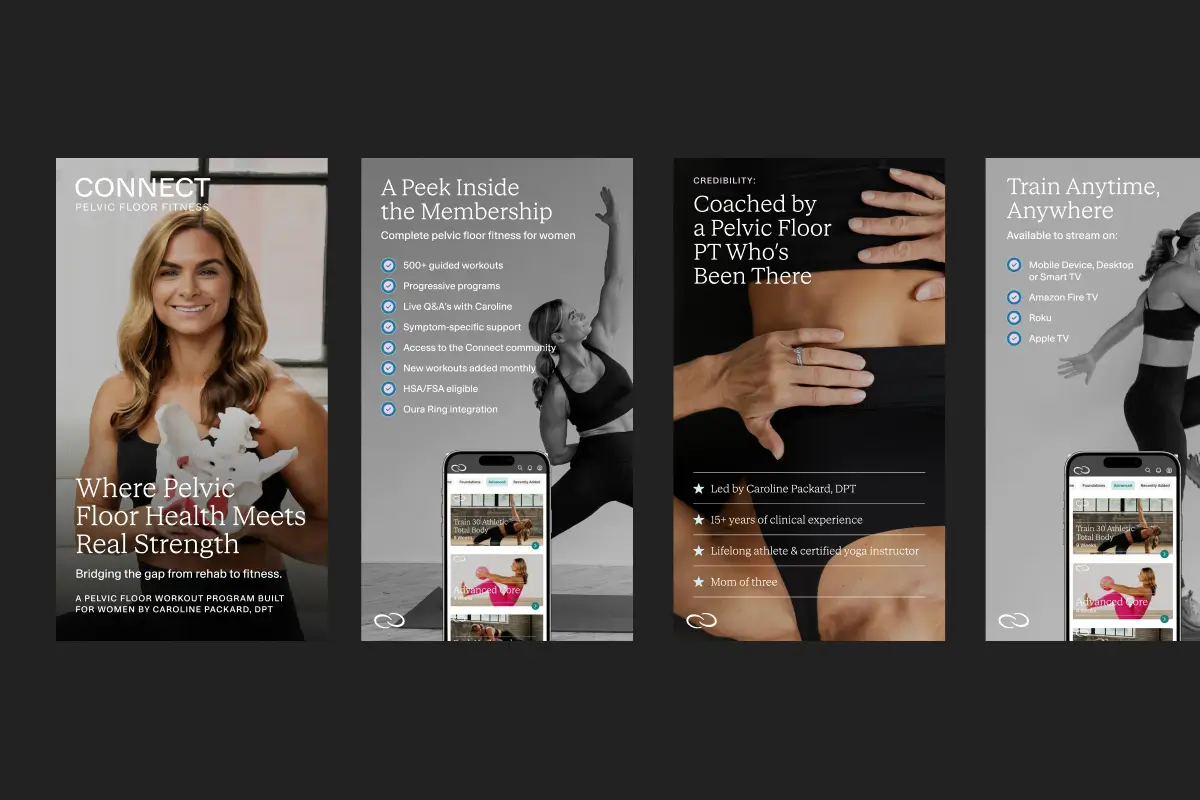
With Connect Pelvic Floor Fitness, a pelvic floor wellness training platform, the focus was on refreshing an existing brand and bringing greater clarity to its messaging. The team has since carried that consistency across its marketing channels, continuing to test and refine its approach based on what it learns from its audience.
The specifics look different from brand to brand, but the role of the foundation remains consistent. Branding gives a business a clear sense of who it is and how it wants to be presented, while marketing puts that foundation into practice, allowing the business to reach its audience, learn from the response, and evolve over time.
Branding defines the identity; marketing builds the reach.
The difference between branding and marketing becomes clearer when you look at the role each one plays within the larger business.
Branding establishes the foundation: who you are, how you’re positioned, what you stand for, and how people should recognize and understand you. Marketing then takes that foundation into the world through the channels, campaigns, and ongoing communication that help you reach your audience.
For founders, understanding that distinction can make it easier to determine what kind of support you actually need. A branding agency can help define the strategy and identity underneath the business, while a marketing team can use that foundation to build awareness, test messaging, and drive ongoing growth.
At Isla Luna Studio, our focus is on the foundational branding work. Through our brand strategy and design expertise, we help businesses build the clarity and identity their teams need to market themselves consistently and confidently.
Whether you’re building a brand in health and wellness, fashion and beauty, food and beverage, or travel and lifestyle, the principle remains the same: establish the foundation, then give your marketing something meaningful to build on.
If you’re looking for a boutique branding agency to help define your brand strategy, positioning, and identity, start a project with us.

Looking to fall down more rabbit holes?
Related Articles

5 Signs You're Ready to Invest in Branding
Branding can be a meaningful investment, but knowing when to make it is just as important as knowing why you need it. In this post, we explore five signs your business may be ready for branding, from having a clear sense of your audience and offering to reaching a stage where your existing brand no longer reflects where the business is headed.


The Advantage Every Brand Founder Already Has
For some brand founders, the natural inclination is to treat themselves like background information. They’re comfortable speaking about their business and they can explain the product and market opportunity. But when it comes to the deeper story — the reason they started, the frustration they experienced before anyone else acknowledged it....

Answering Our Most Frequently Asked Questions
From project timelines and investment ranges to post-launch support and ROI, this FAQ covers everything you need to know about working with Isla Luna Studio. Explore our approach to branding, website design, marketing strategy, and building impactful businesses.
Good things, straight to your inbox
Stay in the loop on Isla Luna Studio news, a peek behind the scenes, and more.
