The blog
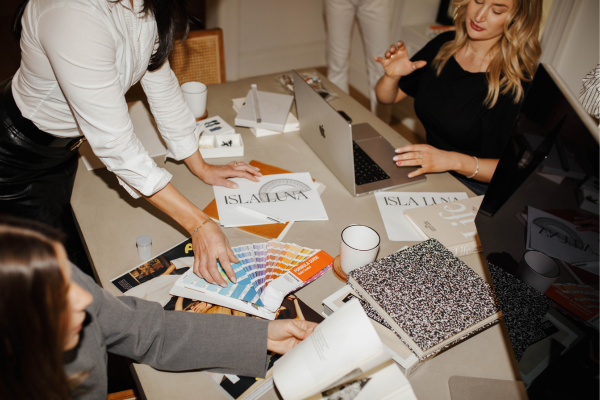
In a world of fast-moving trends, algorithm-driven aesthetics, and endless visual inspiration, it’s easy for founders to start building toward what’s working for someone else. One brand launches a polished rebrand, another goes viral on TikTok, and suddenly every decision starts filtering through comparison instead of clarity.
But the brands that last are rarely built that way. They’re built from the inside out with a clear point of view, a strong sense of purpose, and enough conviction and integrity to know what actually fits. That’s the difference between a brand that feels timely for a season and one people remember years later.
The real cost of chasing trends
Most founders don’t consciously decide to build a trend-driven brand. More often, the shift happens gradually as certain aesthetics begin dominating the market and founders start questioning whether their own business feels modern, elevated, or relevant enough to compete.
As competitors rebrand and visual trends cycle rapidly across social media, decisions can quietly start moving away from long-term conviction and toward short-term comparison, which is often where brands begin losing the distinctiveness that made them compelling in the first place.
When a founder is making a decision based on a trend, whether that’s visual direction, messaging, or positioning, it’s often tied to wanting what someone else has without stopping to ask whether it actually aligns with what they’re building. The result is usually the same: a brand that feels disconnected from the business behind it.
The audience always notices, even if they can’t articulate why.
You can have beautiful visuals, polished packaging, and a perfectly curated feed, but if the substance underneath doesn’t align, people feel that disconnect immediately. Pretty means very little when the messaging doesn’t hold up or the experience behind the brand feels inconsistent. A visually compelling identity might get someone’s attention once. Alignment is what creates trust over time. And eventually, founders end up paying for that misalignment twice.
First, through the confusion it creates externally. Then through the cost of redoing everything internally once the brand no longer feels sustainable.
When a founder is making a decision based on a trend — whether it's visual, messaging, or positioning — it's usually coming from a place of comparison. They're not putting their blinders on. And that usually comes with costs: a brand that feels unaligned, an audience that's confused, and a visual identity they'll be sick of in a year.
Trends move quickly by nature. A brand built entirely around one usually has the same shelf life.
When trendiness actually makes sense
Not every interaction with trends is a mistake. There’s a major difference between using trends and building on them.
A trending audio clip on TikTok, a certain Reels format, or a new content behavior on Instagram can absolutely be useful tools for visibility and audience growth. Brands should stay culturally aware. They should understand how people are consuming content and where attention is shifting online.
The problem starts when trend-chasing moves beyond content strategy and begins influencing the actual identity of the brand. That’s when founders start reshaping their messaging, visuals, voice, or positioning to match whatever is having a moment instead of reinforcing the thing that originally made their business distinct. Over time, the brand becomes harder to recognize because there was never a stable foundation underneath it to begin with.
The clearest brands are able to engage with trends selectively because they already know who they are.
They know which opportunities fit their perspective and which ones don’t. They can participate without abandoning their identity every six months. The unclear brands get swept along by every shift because they’re still searching for external validation to define them.
Trends work best when they stay in the content layer, not the strategy layer. Use them when they amplify your point of view. Step back when they start replacing it.
What a brand built to last looks like
The strongest brands tend to share a few recognizable qualities.
First, there’s brand clarity. You immediately understand what the brand is, who it’s for, and why it exists. Nothing feels confusing or overly complicated. Many of these brands, particularly at launch, are focusing in on just one product or service rather than trying to do everything at once.
Then there’s ease. The brand feels natural in its own skin. It’s not overexplaining itself or trying too hard to prove its value. Every touchpoint feels cohesive because the business knows what it stands for.
Consistency matters, too. The strongest brands sound the same everywhere they show up. Their website, social presence, packaging, messaging, and customer experience all reinforce the same feeling.
And finally, there’s care. You can tell when real thought has gone into the details. Not in a performative way, but in a way that signals respect for the audience and confidence in the business itself.
As Isla Luna Studio co-founder Kayle Schlesner puts it:
“It looks like clarity. There's a sense of ease about it — it feels effortless. It's consistent and put together. It sounds the same everywhere. You can tell there's care behind every decision and every message being put out into the world.”
None of those qualities happen accidentally. They’re usually the result of starting with strategy long before aesthetics enter the conversation.
Start with your why — then build everything else
Before we think about typography, color palettes, packaging direction, or website design, we spend time understanding the story behind the brand itself.
That’s the first step in every project we take on. Through strategic brand questionnaires, collaborative workshopping sessions, and deep conversations with founders, we uncover the core of the business: why it exists, who it serves, what differentiates it, and how it should make people feel. The conversations that come from these services shape every downstream decision that follows.
When the strategy is clear, design becomes far more powerful because it has direction behind it.
Instead of choosing visuals because they feel trendy or aesthetically appealing, we’re building a system that reinforces the business at every level. The messaging has substance. The visual identity reflects something real. The website design feels aligned with the experience the brand is actually delivering.
That consistency also changes how a business evolves over time. Brands built around a strong point of view tend to make decisions with more continuity because they’re not rebuilding their identity every time the market shifts or a new aesthetic trend emerges online.
Over time, that creates something far more valuable than a visually cohesive brand: it creates direction, recognizability, and a stronger sense of momentum as the business grows.
Staying true to your roots, even as you evolve
As businesses grow, their visual identity naturally becomes more refined, more mature, and more expansive over time. What tends to remain consistent is the perspective underneath the brand itself.
We’ve seen that evolution firsthand within Isla Luna Studio over the past several years. Since launching in 2021, the visual identity surrounding the studio has evolved significantly alongside the growth of the business. The aesthetic has become more elevated and refined over time, but the core feeling behind the brand has remained remarkably consistent, which is part of what allows the work to still feel recognizable years later.
The same continuity exists in the kinds of founders we’re drawn to working with. From the beginning, we’ve gravitated toward businesses with substance behind them: thoughtful products, meaningful services, and founders building with long-term vision rather than short-term momentum. That throughline has remained consistent because it reflects the kind of work we genuinely want to contribute to.
That’s often what lasting brands get right. Evolution works best when it sharpens the original perspective rather than replacing it entirely.
The businesses that remain recognizable over time are usually the ones evolving with greater depth and precision, not the ones reshaping themselves around every new trend cycle.
The brands people remember are the ones who knew what they stood for
The most recognizable brands rarely become memorable because they followed trends better than everyone else. People remember them because they maintained a consistent point of view over time, understanding what they stood for, who they were speaking to, and the kind of experience they wanted people to associate with the brand from the beginning.
The businesses people connect with most deeply are usually not the ones trying to appeal to everyone at once. More often, they’re the brands operating with a clear sense of intention behind what they create. They care about the people they’re building for, pay attention to feedback, and evolve in response to their audience without losing the perspective that made them distinctive in the first place.
That balance is often what allows a brand to stay recognizable long term. The strongest businesses are able to adapt thoughtfully to changing markets and customer behavior without reshaping their entire identity around every new trend cycle online.
Timeless doesn’t mean static — it means strategic
Building a brand that lasts does not mean ignoring trends entirely or pretending cultural shifts have no influence. Markets evolve, platforms change, and visual styles naturally cycle in and out of relevance. The difference is that enduring brands engage with those shifts selectively rather than rebuilding themselves around each one.
A certain aesthetic may dominate for a season. A platform format may suddenly reshape the way businesses create content online. Entire visual languages can become oversaturated almost overnight. Those shifts are part of the natural rhythm of the internet, which is exactly why they tend to be temporary.
What lasts longer is a recognizable point of view.
The brands that remain relevant over time are usually the ones operating from a strong enough foundation that they can evolve naturally without losing their identity in the process. Rather than reacting to every new trend cycle, they’re able to filter decisions through a more established perspective about who they are, what they value, and how they want people to experience the brand.
That continuity creates a very different kind of flexibility. It allows brands to grow, refine their aesthetic, expand their audience, and modernize their presence without requiring complete reinvention every few years. It also creates more consistency across messaging, marketing, and creative direction because decisions are being made against a clearer long-term vision instead of short-term momentum.
Build from something real
For founders feeling disconnected from their brand, the answer is not always a complete overhaul. Often, it’s a matter of revisiting the original perspective underneath the business before layering on another rebrand, content strategy, or visual refresh.
Once that perspective becomes more defined, the rest of the brand tends to operate more cohesively. Design decisions become more directional, messaging becomes easier to maintain consistently, and the business begins building stronger recognition over time because people understand what distinguishes it from everything else competing for attention.
That’s the work we care most about at Isla Luna Studio, and it’s why strategy remains such an important part of the process. The goal is never to build a brand that feels frozen in time. It’s to build one with enough depth and consistency to evolve without losing the qualities that made people connect with it in the first place.
If you’re looking to build a brand designed for longevity rather than short-term relevance, fill out an inquiry form to get the conversation started.

Looking to fall down more rabbit holes?
Related Articles

Behind the Scenes at Isla Luna Studio's Fifth Birthday Party
On June 3, we gathered at The Hall at The Robey Chicago to celebrate a milestone for our business: Isla Luna Studio's fifth birthday. The evening brought together clients, collaborators, creative partners, friends, family, and team members who have shaped the studio's journey from the very beginning. It also marked the launch of our new website and refreshed brand identity: a fitting way to step into the next chapter of Isla Luna Studio.

What to Expect When Working With a Branding Studio
For many founders, hiring a branding studio is a completely new kind of collaboration. They likely understand what they want at the end of the process: They want a brand that feels elevated, cohesive, recognizable, and reflective of the business they’re building. What’s often less clear is how you actually get there or what the experience....
Where We’ve Been: An Overview of Recent Projects
Take a behind-the-scenes look at some of Isla Luna Studio's recent branding and website design projects. From coworking concepts and fitness platforms to coaching businesses and luxury event brands, these launches showcase the power of thoughtful strategy and intentional design.

Success Stories of Isla Luna Studio Clients
Taking a little walk down memory lane today and sharing some notable success stories of Isla Luna Studio clients! Megan Sheley: Megan is a full-time recipe developer and fellow food-obsessed girly creating dishes no matter what you’re in the market for — vegan, gluten-free, dairy-free, paleo, the full indulgence…


Thank You for 1k Followers on Instagram! & How We Got Here
Growing an Instagram following doesn't happen overnight. In this post, we're sharing the five strategies that helped Isla Luna Studio reach 1,000 followers, including consistency, engagement, content planning, inspiration, and making the most of existing resources.
Good things, straight to your inbox
Stay in the loop on Isla Luna Studio news, a peek behind the scenes, and more.
